

Endurance Docking & Gravity Escape
Gravity Well Cleared!
You matched the 67 RPM spin of the Endurance, locked docking clamps, and accelerated past escape velocity out into deep space!
Orbital Disintegration!
Atmospheric drag exceeded structural tolerances. The station breached the mesosphere boundary.
Pilot Controls & Visual Alignment Guide
Physics of the Scene (Class 11 & 12)
Rotational Kinematics: When matching spin, relative rotation vanishes ($\Delta \omega o 0$). In the cockpit view, the station appears frozen while stars spin!
Escape Velocity: Once docked, total mass increases. Retro-burn accelerates past escape speed ($v \ge \sqrt{2GM/R}$) before atmospheric drag shears the structure.
Space & Astronomy Observatory
🚀 Interstellar Spaceship Landing Simulator
Pilot scientific exploration landers across 15 worlds. Supports full keyboard shortcuts (`W`, `A`, `S`, `D`, `Space`, `Shift`, `T`, `R`), mobile touchscreen controls with haptic feedback, and relativistic proper time dilation!
Level 1: Moon — Chandrayaan-3 (Shiv Shakti Point)
Solar SystemVacuum descent. Target pad: vertical velocity ≤ 2.5 m/s, lateral drift ≤ 1.0 m/s, tilt ≤ 12°.
Choose a world to launch mission immediately
View All 15 Campaign Level Badges & Gravity Specs
Mission Ready
Click "START MISSION" button to begin descent!
Touchdown Confirmed!
Touchdown confirmed within structural safety limits!
Live ISS Orbital Telemetry
Rooftop Sky & Light Pollution Radar
- • Moon craters & seas
- • Jupiter & Saturn rings
- • ISS & Starlink passes
- • Sirius, Betelgeuse & Vega
- • Milky Way core blotted out
- • Deep sky emission nebulae
- • Andromeda galaxy spiral arms
- • Faint meteor shower trails
Cosmic Speed-of-Light & Signal Delay Radar
In vacuum, light travels at c = 299,792,458 m/s. Across the universe, it crawls. Witness true cosmic latency.
The Moon (Apollo & Chandrayaan)
Apollo astronauts experienced a noticeable 2.5-second radio delay with NASA Houston. Lasers fired from Earth bounce off Apollo retroreflectors in ~2.56 seconds to measure lunar distance down to millimeters.
Mind-Blowing Space Facts & Cosmic Phenomena
6 Billion Tons in a Teaspoon
Neutron stars pack 1.4 to 2.1 solar masses into a sphere just 20 km across. In this state, electron degeneracy pressure fails, forcing protons and electrons to merge into pure neutrons:
Diamond Rain on Neptune & Uranus
Beneath the icy atmospheres of Uranus and Neptune, pressures exceed 50,000 atmospheres and temperatures reach 5,000 K. Methane (CH4) cracks, squeezing pure carbon atoms into diamond crystals that hail downward.
Spacetime Warping Near Black Holes
Einstein's General Relativity dictates that clocks tick slower in stronger gravitational fields. Near Sagittarius A*, 1 hour for an observer equals years for people on Earth:
Boomerang Nebula: 1 Kelvin (-272.15°C)
Deep space is kept at 2.73 K by the cosmic microwave background. But gas outflow in the Boomerang Nebula expands adiabatically at 164 km/s, cooling it to 1 Kelvin—colder than the Big Bang's background glow!
1% of Analogue Static is the Big Bang
When an old cathode-ray TV was untuned between channels, ~1% of the dancing black-and-white 'snow' was caused by your antenna capturing the Cosmic Microwave Background photons released 380,000 years after the Big Bang.
Saturn Would Float in Water
Despite being 95 times the mass of Earth, Saturn's composition is predominantly hydrogen and helium. Its mean density is only 0.687 g/cm³—less than liquid water (1.000 g/cm³). In a massive bathtub, it floats!
Cosmic Scale: Planetary Gravity & Time Explorer
Explore how Newton's Gravitation Law (W = mg = G·M·m / R²) and Kepler's 3rd Law transform your mass, weight, and chronological age across the universe.
ISRO Flight Director Physics Challenges
Real mission mathematics aligned with Class 11 & 12 Gravitation, Conservation Laws, and Astrophysics Olympiads.
NASA Cosmic Spark: Conceptual Astrophysics
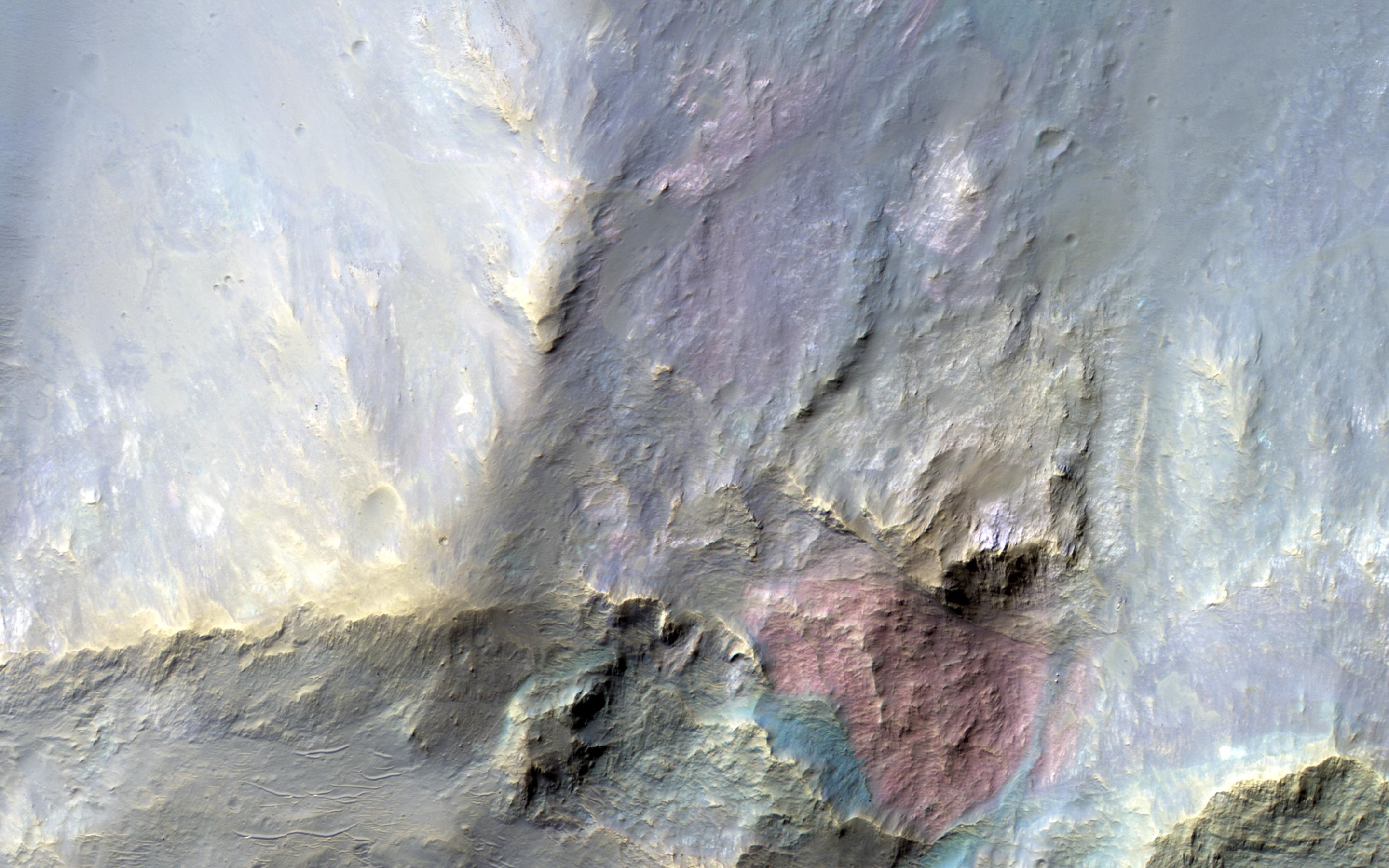
The Eagle Nebula: Pillars of Creation
Jeans Mass instability and gravitational collapse where F = (G · M₁ · M₂) / r² overcomes thermal radiation pressure.
Towering columns of cold interstellar gas and dust where new stars are actively condensing. Under self-gravitation, molecular clouds reach Jeans Mass threshold, collapsing to ignite nuclear fusion.
🎯 2D Projectile Motion Laboratory
Launch kinematics under variable planetary gravities, air drag, and target rings.
⚡ Ohm's Law Interactive Circuit & Overload Sparks
Control DC potential and resistance; observe current flow, filament heating, and overload fuses.
🧪 Acid-Base Neutralization & Titration Laboratory
Titrate HCl with NaOH; observe Universal Indicator color transition and exothermic heating.